
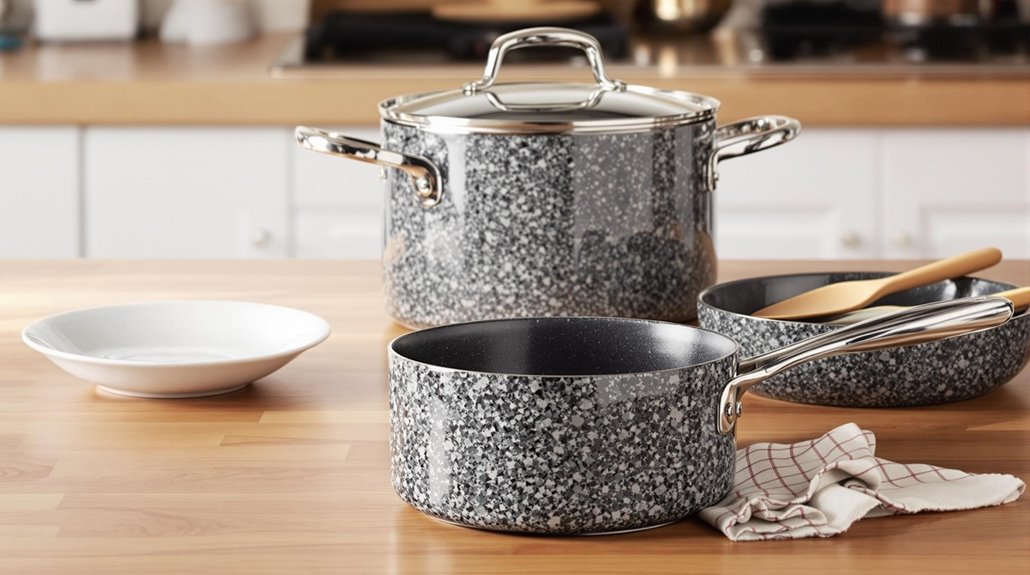
Granite cookware boasts a non-stick surface that allows for healthier, low-oil cooking and effortless maintenance, all while complementing your kitchen’s aesthetic. Its lightweight design guarantees easy handling, although you’re advised to avoid metal utensils to preserve the scratch-resistant coating. Be cautious of its wear over time, as the non-stick layer can degrade, leading to potential food-sticking and health risks if damaged.
It’s not suitable for induction cooktops and is vulnerable to warping at extreme temperatures. Granite cookware offers benefits and challenges, and exploring it further will provide you with more insights into its suitability for your kitchen.
Understanding Granite Cookware
Granite cookware offers a modern twist on traditional kitchen necessities with its unique design and functionality. It features an aluminum core covered with a granite-like non-stick surface, ensuring quick heat distribution and a reliable cooking experience. You’ll appreciate its lightweight nature, making it easy to handle larger pots and pans. To use it properly, avoid metal utensils to maintain its scratch-resistant coating. While it allows healthier cooking with minimal oil, careful handling is fundamental to avoid potential health risks from damaged coatings. Remember, care and maintenance are vital; this cookware might not handle extreme temperatures well and can have a shorter lifespan than cast iron. Welcome the aesthetic appeal and efficiency, but treat it with the care it demands.
Advantages of Granite Cookware
With a solid understanding of granite cookware’s unique design and proper care, it’s time to investigate the numerous advantages it offers. Granite cookware boasts a non-stick surface, allowing you to cook with little or no oil, promoting healthier meals. Its lightweight design makes handling large pots and pans effortless, perfect for everyday use. The scratch-resistant coating lets you use metal utensils without worry, enhancing your kitchen tool versatility.
One of the main advantages of granite cookware is that it’s free from harmful chemicals like PFOA and PTFE, presenting a safe option for your cooking needs. Its sleek aesthetic appeal adds a modern touch to your kitchen decor, while its effective heat distribution guarantees evenly cooked meals. Plus, it’s easy to clean!
Disadvantages of Granite Cookware

While granite cookware has its benefits, it’s essential to be aware of its potential downsides. The non-stick coating may gradually wear off, leading to food sticking issues over time. You must handle it carefully, as extreme temperatures can cause warping if the cookware is overheated or subjected to sudden temperature changes. Although the non-stick surface is somewhat scratch-resistant, using only silicone, wood, or plastic utensils is recommended, which limits your utensil choice.
Furthermore, granite cookware typically isn’t compatible with induction cooktops, restricting its use to specific stove types. Compared to longer-lasting materials like cast iron, granite cookware often has a shorter lifespan due to the degradation of the non-stick coating over time.
Maintenance and Care Tips
Understanding the disadvantages of granite cookware sets the stage for proper maintenance and care. Start by hand washing your cookware to maintain its non-stick surface, avoiding the harsh detergents found in dishwashers. Use silicone utensils to prevent scratches and preserve effectiveness. To prolong its lifespan, avoid extreme temperature changes by letting the cookware cool gradually before washing. This prevents warping and damage. Regularly inspect for wear like scratches or peeling, and replace cookware if you notice any compromise in the non-stick layer.
For an extra step in care, consider seasoning the surface with a small amount of oil. This maintains non-stick properties and improves cooking performance. With these tips, your granite cookware will remain in top condition.
Safety Considerations

Granite cookware offers a safer alternative to traditional Teflon, especially when you use it correctly. It’s typically free from harmful chemicals like PFOA and PTFE, guaranteeing a safer cooking surface. However, maintaining its non-stick properties requires attention to safety and health. Avoid high heat, as overheating can degrade the coating, potentially releasing toxic fumes. Regularly inspect your cookware for wear, scratches, or chipping, which could expose the aluminum core and increase health risks associated with it. Proper usage is key; control the temperature to keep your granite cookware safe. Vitreous enamel granite options are safer, as they’re non-reactive with acidic foods and lack harmful substances. By following these practices, you secure both longevity and safety in your kitchen.